
Average True Range (ATR)
The ATR primarily measures the volatility of a market in a specific period. Unlike Standard Deviation, the innovation introduced by Wilder is the measure of True Range, which also considers price gaps that can form between one day and the next.
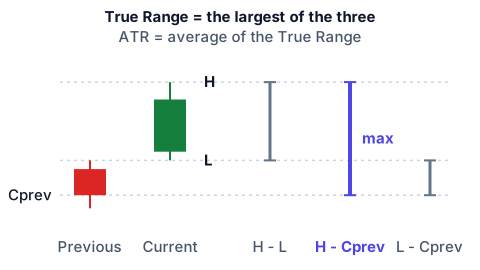
The ATR moves in relation to price movement: a high value indicates greater volatility, while a low value represents the opposite. It creates an average based on the calculation of the "true range," which measures the maximum and minimum movements of an asset.
To calculate the ATR, the average of the true range is considered, defined by three differences: the difference between the highest level and most recent close; the difference between the lowest level and most recent close; the difference between the current highest and lowest level
It's important to note that the ATR uses absolute values, so securities with higher prices will naturally have higher ATR values, making it impossible to directly compare ATR values between different securities.