
Capital Asset Pricing Model (CAPM)
The Capital Asset Pricing Model (CAPM) is a fundamental framework used to determine the theoretically appropriate required rate of return of an asset. It establishes a linear relationship between the expected return of an investment and its systematic risk, as measured by Beta. The core idea is that investors need to be compensated for two things: the time value of money (represented by the risk-free rate) and the risk taken (represented by the risk premium).
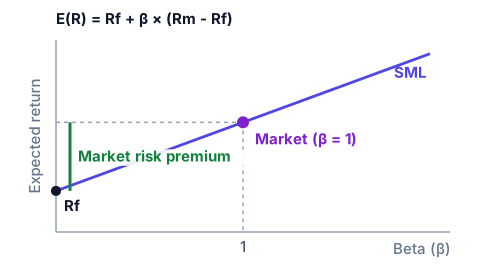
Formula: E(R) = Rf + β × (Rm - Rf).
Conceptually, the model calculates the expected return by starting with a risk-free rate (like Government Bond yields) and adding a premium. This premium is determined by multiplying the asset’s sensitivity to the market (Beta) by the extra return that the overall stock market provides over a safe investment. This represents the "fair" reward for the specific level of market risk an investor is assuming.
In practical valuation, CAPM is the "engine" used to calculate the Cost of Equity, which is a critical input for corporate finance models and Discounted Cash Flow (DCF) analyses. While widely used, it assumes market efficiency and that investors hold diversified portfolios, meaning they are primarily concerned with systematic risk, the risk that cannot be diversified away, rather than the total volatility of a single stock.