
Central Banking & Monetary Policy
Central banks are the cornerstone institutions of modern monetary systems, responsible for managing national monetary policy to maintain price stability, support employment, and foster economic growth. These institutions control the money supply and interest rates, serving as the ultimate arbiters of financial stability. Their decisions ripple through global markets, affecting everything from currency values to investment flows, making central banking one of the most influential forces in the financial world.
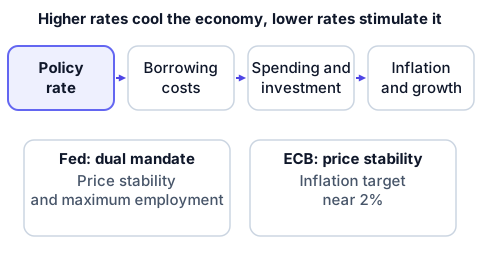
The world's major central banks each operate with distinct mandates and approaches. The Federal Reserve (Fed) in the United States operates under a dual mandate, targeting both price stability and maximum employment through its Federal Open Market Committee (FOMC) meetings held eight times annually. The European Central Bank (BCE) primarily focuses on price stability with an inflation target near 2%, making decisions through its Governing Council. The Bank of Japan (BoJ) employs unique tools like Yield Curve Control and has experimented with negative interest rates. These institutions use various monetary policy tools including interest rate adjustments, quantitative easing programs, forward guidance communication, and reserve requirements for commercial banks.
Central bank policies profoundly impact financial markets through multiple transmission mechanisms. Interest rate changes directly affect borrowing costs, with higher rates typically cooling economic activity and lower rates stimulating growth. Quantitative easing programs involve massive bond purchases to inject liquidity into the financial system, often leading to asset price inflation and currency weakening. Forward guidance helps markets understand future policy intentions through tools like the Fed's "dot plot" projections. The market implications are significant: rising rates generally favor bonds over stocks, QE programs can inflate asset prices, and hawkish or dovish communication can trigger substantial market volatility as investors reposition their portfolios based on expected policy changes.