
Index
An index, in finance, is a statistical measure that tracks the performance of a group of assets. It serves as a benchmark or proxy for a particular market segment, industry, or even the broader economy. By observing the movement of an index, investors can gauge the overall health and direction of the underlying assets it represents. Indices are crucial tools for analysis, portfolio management, and even as the basis for various financial products like index funds and exchange-traded funds (ETFs).
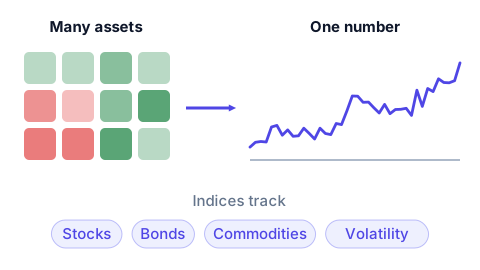
Financial markets utilize a diverse range of indices, each designed to capture specific aspects of market behavior. Here's an overview of some key types: Stock Market Indices measure the performance of a selection of stocks, representing a specific market or sector; Volatility Indices measure the expected future volatility of a market or asset class; Bond Market Indices track the performance of various types of bonds, such as government bonds or corporate bonds; Commodity Indices track the prices of a basket of commodities, such as oil, gold, or agricultural products; Currency Indices measure the value of one currency against a basket of other major currencies; Inflation Indices, like the Consumer Price Index (CPI), measure the average change over time in the prices paid by urban consumers for a market basket of consumer goods and services.