
Intrinsic & Extrinsic Value
The Intrinsic value of both call and put options is the difference between the underlying stock's price and the strike price. Intrinsic value only measures the profit as determined by the difference between the option's strike price and market price.
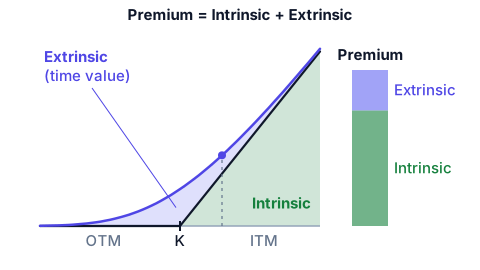
An option with a strike price that equals the market price at expiration, an "at the money" option (ATM), or OTM option, will have zero intrinsic value. Intrinsic value only shows how in-the-money an option is, considering its strike price and the market price of the underlying asset.
Other factors can affect the value of an option, such as how much time is remaining until expiration. Extrinsic value thus represents the speculative component of an option's price. It is influenced by time, volatility and potential price movements.
Both Intrinsic value and Extrinsic value combine to make up the total value of an option's price: Option Premium = Intrinsic value + Extrinsic value
As we get closer to expiration, the time value (Extrinsic Value) of the option falls. This plays to the advantage of option sellers and to the disadvantage of buyers. At expiration, the time value of the option is 0 (Extrinsic Value) because there is no longer a probability that the option will expire ITM or remain ITM.
If at expiration the option is OTM, the option price is zero since the premium will quote neither intrinsic nor time-Extrinsic Value. At expiration then the option either quotes only Intrinsic Value or quotes nothing and expires worthless.