
Moneyness
Traders define options as "in the money" (ITM) or "out of the money" (OTM) by the strike price's position relative to the market value of the underlying asset (the moneyness).
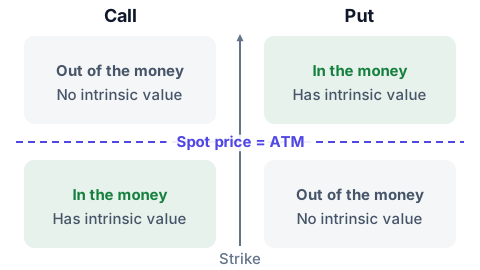
An ITM option is one with a strike price that has already been surpassed by the current stock price. An OTM option has a strike price that the underlying security has yet to reach, meaning the option has no intrinsic value.
A call option with a strike price above the underlying price is considered OTM because the underlying price has not yet reached this level. A put option with a strike price above the underlying price is considered ITM, because the holder has the right to sell above the current market level. The relationship is therefore inverted between calls and puts: the same strike that leaves a call OTM leaves a put ITM.