
OPEC
OPEC is the acronym for Organization of the Petroleum Exporting Countries, and refers to the organization of countries that produce and export oil worldwide. The objective is to serve the economic interests of member states through coordination and harmonization of oil policies. Specific objectives: ensure supply to member countries, maintain price stability, guarantee competition among various producers, ensure capital returns to investors. Essentially, OPEC is a cartel that aims to reduce competition in the sector, positioning itself opposite to a broader form of market freedom.
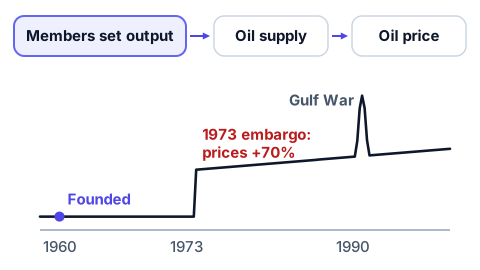
Founded in Baghdad in 1960 on the initiative of Saudi Arabia, the founding countries were: Saudi Arabia, Iran, Iraq, Kuwait, Venezuela. Although predominantly Arab, it was a South American state (Venezuela) that proposed its establishment. Many major oil producers are not part of OPEC, which is why OPEC+ was created, including: Russia, Mexico, Sudan, etc.
Real effects: OPEC has played a crucial role in historical events related to oil and the global economy. First oil shock (1970s): in October 1973, in response to Western support for Israel in the war against Egypt and Syria, OPEC blocked exports to the West, raising prices by 70% and causing an energy crisis. Gulf War (early 1990s): another dramatic moment linked to oil and OPEC.