
Sharpe Ratio
Developed by William F. Sharpe, this ratio is the industry standard for calculating risk-adjusted return. It measures the excess return (reward) per unit of total risk (volatility). It allows you to compare two assets with different volatility levels on an equal footing to see which one offered a better 'return per unit of pain'.
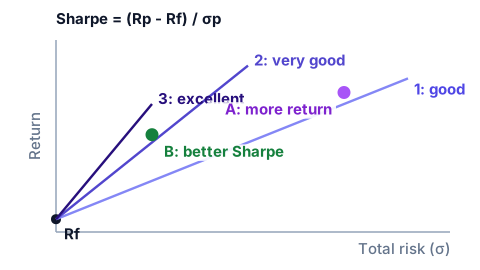
Formula: (Rp - Rf) / σp.
The ratio is calculated by taking the profit earned above a safe risk-free investment and dividing it by the asset’s standard deviation. A Sharpe Ratio above 1.0 is generally considered good, 2.0 very good, and 3.0 excellent. However, it assumes that returns are distributed normally and treats "upside" volatility (unexpected gains) the same as "downside" volatility (unexpected losses), which can be a limitation for certain strategies.