
Triple Exponential Moving Average (TEMA)
The calculation principle of the TEMA is similar to the Double Exponential Moving Average (DEMA). The name "Triple Exponential Moving Average" does not correctly reflect its algorithm: it is a unique combination of single, double, and triple exponential moving averages that provides less lag than each of them individually.
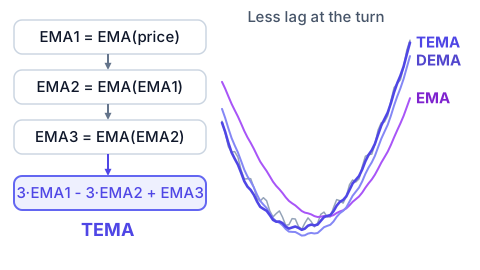
The TEMA can replace traditional moving averages to smooth price data or other indicators. This three-stage smoothing process helps filter noise by responding more quickly to price changes.
The TEMA indicator consists of three parts: the first EMA is calculated from the original price data; a second EMA is calculated from the first EMA; a third EMA is calculated from the second EMA.
The final value of the TEMA is derived from a formula that combines the results of these three EMAs, with the aim of smoothing price action while maintaining sensitivity to market movements.
Advantages of TEMA compared to EMA and SMA:
- Reduced lag: by combining three EMAs, the TEMA reduces the lag in response to price changes.
- Smoother line: the TEMA produces a more fluid line compared to SMA and EMA.
- Better for volatile markets: the TEMA is more responsive in highly volatile conditions.