
Treynor Ratio
The Treynor Ratio is similar to the Sharpe Ratio, but with one key difference: it uses Beta (market risk) as the measure of risk instead of total volatility. This makes it a more appropriate tool for investors who hold well-diversified portfolios and are primarily concerned with the risk that cannot be eliminated by adding more stocks.
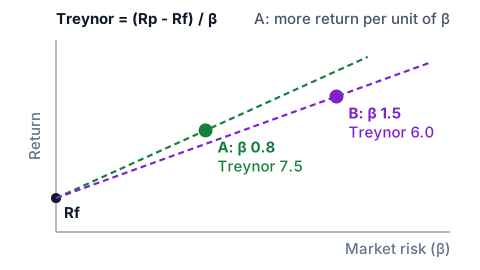
Formula: (Rp - Rf) / β.
While the Sharpe Ratio evaluates the efficiency of an asset in isolation, the Treynor Ratio evaluates how well an asset contributes to a broader portfolio. It measures the excess return earned for each unit of market sensitivity. Comparing the two can reveal whether an asset’s risk is mostly driven by general market trends or comes from its own unique, internal price swings.